
| Video and Article courtesy of the Parnelli Awards and PLSN Magazine |
 |  |
“The definition of an innovator is ‘a person who develops a new design, product, or who has new ideas about how to do something’,” says Jack Kelly of Group One Limited, distributor of DiGiCo consoles and other pro audio and lighting brands. “John Stadius has continued to develop new ideas and designs for many, many years and has helped redefine what’s possible in the pro-audio industry.”
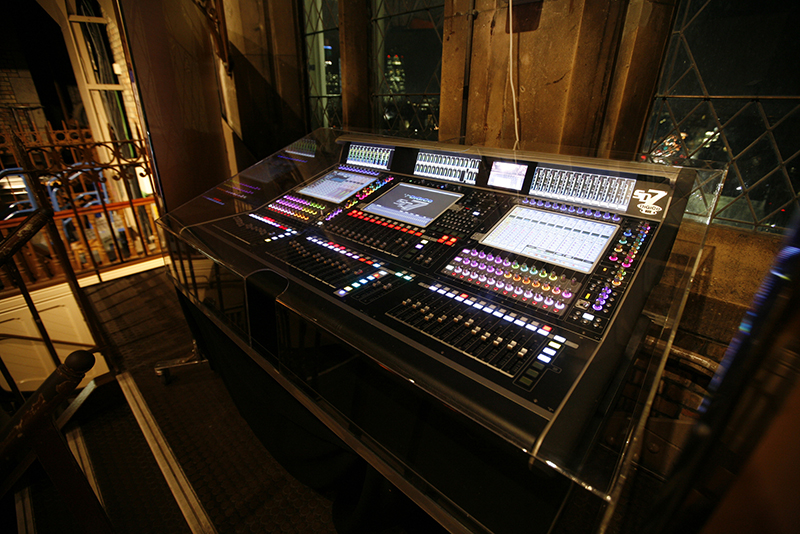
The Parnelli Board of Advisors is honoring pro audio pioneer and DiGiCo technical director John Stadius with the 2018 Parnelli Audio Innovator Award. While not inventing the digital audio console, Stadius certainly made it feasible, accessible, and practical. He was behind the 1996 Virtua and the DPC-II in 1998. He developed the assignable dynamic system DSP for dynamic processors and Stealth Digital Processing. Stadius has been in front of — or involved with — every innovation coming out of DiGiCo’s R&D team, and he continues in that role, most recently with the SD12 console and the S-Series.
This industry is rich in talented engineers building remarkable products, but perhaps what makes Stadius stand out is he never forgets about the real-life world that audio engineers inhabit. “Sound engineers do not want to stop and look up something in a manual,” he says.
He is an engineer’s engineer. As Ron Borthwick, a respected colleague who has worked by his side, puts it: “I once had the pleasure of collaborating on console designs with the late, great Dave Harrison of MCI and Harrison/GLW fame. He told me once, ‘Ron, you can always tell the true pioneers by the arrows in their back.’ In recent years, I have found myself working with John, and judging by his arrow wounds and knowing him, I think he qualifies as a true pioneer.”
If there is one person who isn’t all that impressed with John Stadius, it’s probably John Stadius himself. Whether it was early adopters like Pete Townshend or when one of DiGiCo’s D5T boards went into a theater in London’s fabled West End, Stadius seems nonplussed by it all. “I don’t really think much of those kind of [milestones],” he says with a shrug. “I just think about how I have to get back to the shop and get onto the next job.”
Things that Make Sound
Stadius was born the oldest of two boys in the seaside village of East Wittering, West Sussex, England. “When I was 14, one of the teachers got me interested in electronics — specifically synthesizers — and I started designing and building my own for the guys in the village,” he says. “These were crude — sometimes I’d use parts from an old piano — but they were for guys who couldn’t afford real ones.” While Stadius did a small stint playing one of his creations in a band, he confesses: “I wasn’t a very good player.” He did realize early on that he most liked making things that make sound.
After high school, Stadius attended the University of Surrey in Guildford, England, where he graduated with a degree in electronics/electrical engineering. “In addition to my course work, I made audio transformers, and I found that fascinating.” Less fascinating was the realization that he needed a job of some kind after graduating. Fortunately for the pro audio industry, a friend who had graduated before him named Nicolas Praed landed a job at a company called Soundout Laboratories and gave him a hand up into that organization. “He asked me if I wanted a job, and I said yes, and that was 40 years ago,” Stadius says.
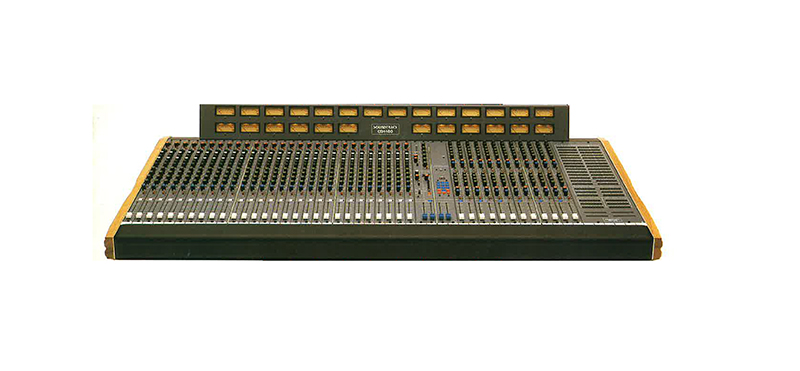
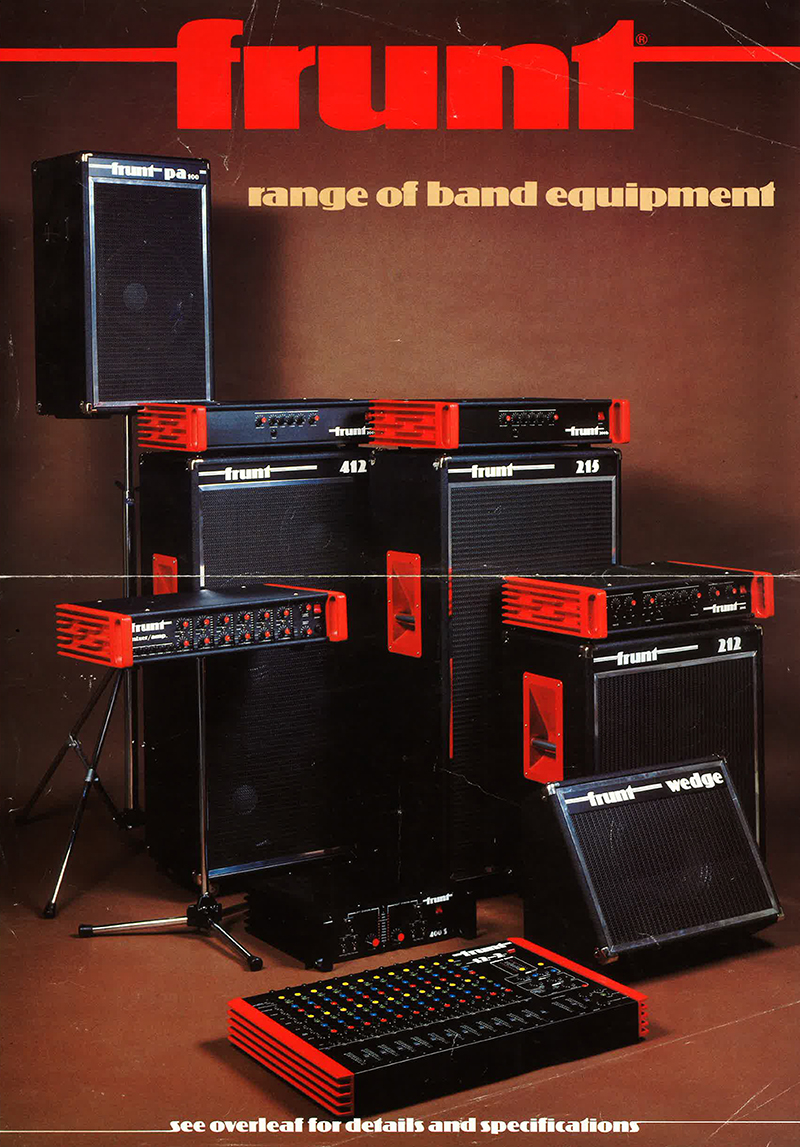
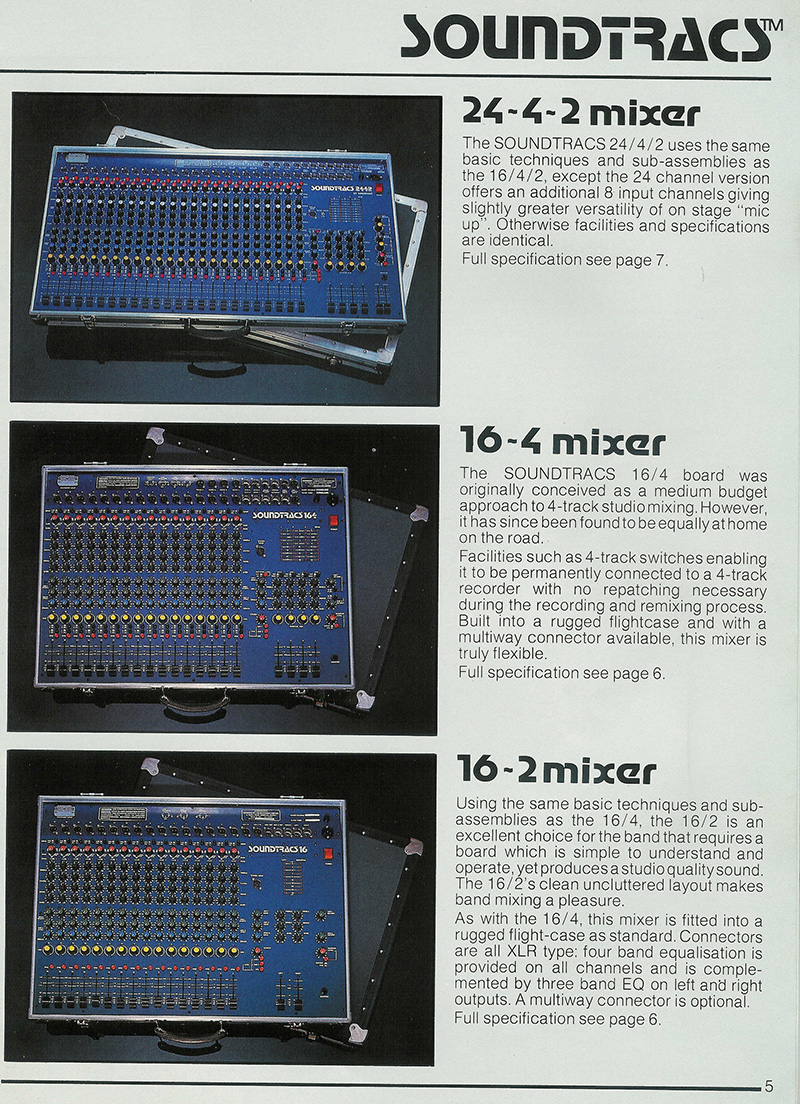
In the beginning, the company was designing consoles, mixers, power amps and speakers for the disco/DJ market (it was the late ’70s). “Then, in 1979, we looked at the market and decided to get into the instrument amplification market.” A line of high-quality amps called Frunt was developed, mostly for guitar and bass, which sold well in Europe. While they were at it, speakers and small mixing consoles were developed. “The consoles were mostly for live use, and they were 12, 16 and 24 channels.”
As the home recording revolution started to transpire, Stadius became technical director of what was renamed Soundtracs. Soundtracs found its footing and was successful throughout the 1980s, creating analog studio mixing consoles and expanding back into the live and broadcast market as well. But in 1982, Soundtracs raised eyebrows by producing its first digitally controlled analog mixing console, the CM4400. Primitive by today’s standards, it nonetheless started Stadius thinking about the possibilities of digital, even as so many others were dismissing it.
During this period, Stadius and his team brought further innovations to the consoles, including an assignable dynamic system DSP for dynamics processors. But he felt that some innovations were too complicated, and he determined early on that technological advancements must be easy to understand and should not leave the lab until they could be made so. While he let his imagination soar into the realm of infinite audio possibilities, he always made sure the practical application of any idea or feature was the priority.
The Digital World
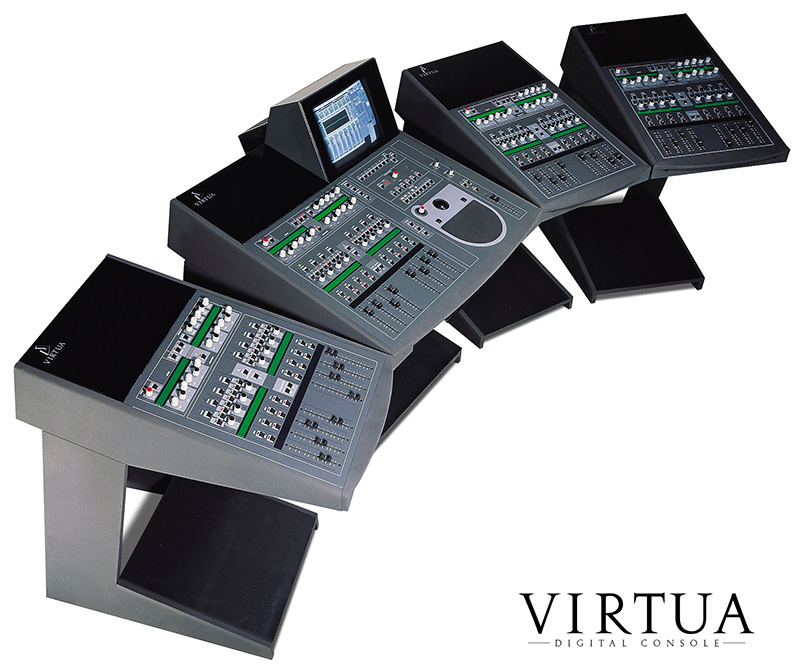
In 1996, the company released its first fully digital console: the Virtua. Defying the naysayers, it was successfully launched at that year’s Frankfurt Musikmesse. Priced at around $20,000 in today’s dollars, it featured total dynamic automation of all parameters, plus snapshots and a channel strip that boasted eight aux sends; four-band, fully parametric equalization; and two dynamic effects sections. It also had onboard transport control functions running MIDI and RS-422.
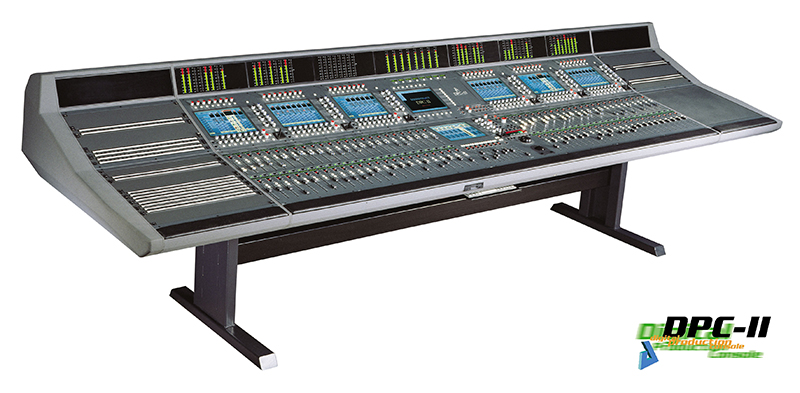
In 1998, Stadius unveiled Soundtracs’ first large-format digital console, the DPC-II. It opened up the studio world with its capacity to control up to 160 channels. “Those who adapted to it saw the advantage of 160 channels instead of 40 or 48, or — if they wanted more than that with an analog board — they had to hook up two to get it,” he says. “I love analog desks, but this was so much easier.” It was fitted with MADI I/Os that could be connected directly to the console, which supported up to a 96 kHz sampling rate and featured SHARC floating-point DSP technology.
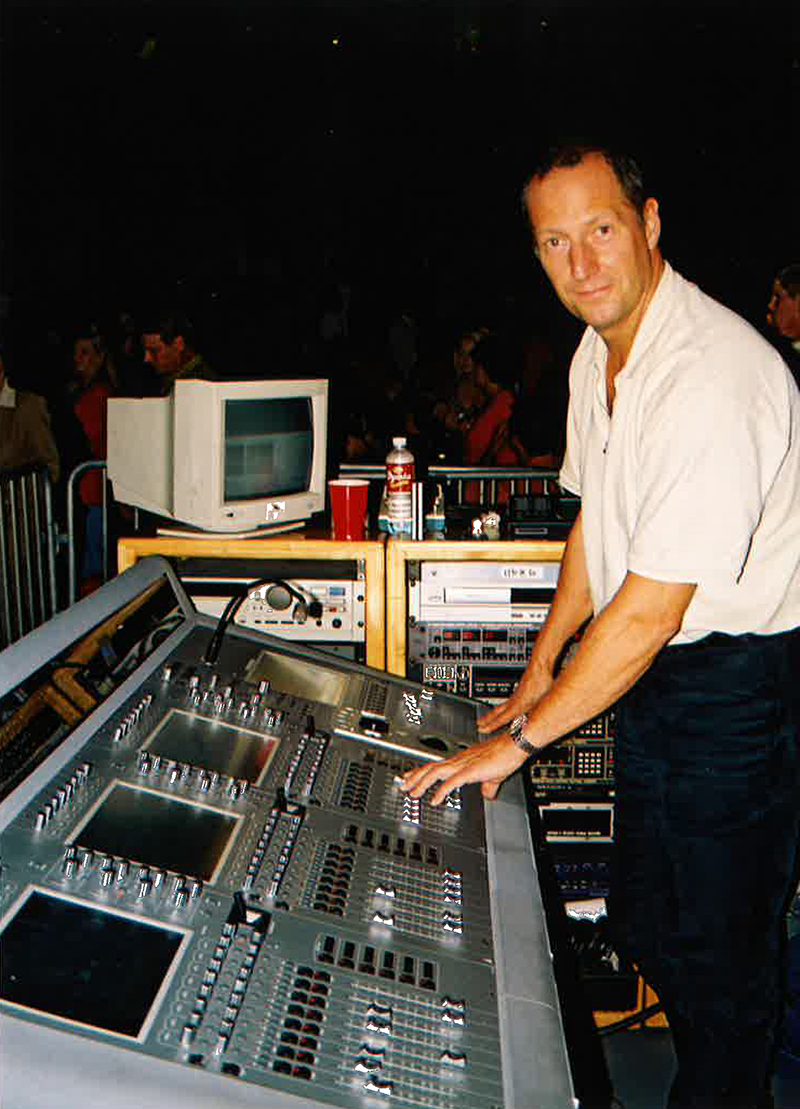
“But MADI was not the best medium for transferring many channels long distances from the stage to FOH,” he says, adding he felt it was too much of a risk relying on Cat-5 type cables. His move to optical was a key development. “Rather than reinventing the wheel, we turned to Optocore in Germany.” Their solution allowed for the transportation of 512 channels in a redundant loop, and Kevlar-lined cables and expander beam connectors were the perfect solution.
Not too long after that, DiGiCo bought Soundtracs, and Stadius continued his work with the D5, the first truly live digital console. The natural extension of this technology was to develop it into a console for post and broadcast markets — leading to the DS00. Then Stadius and the team created the D5T for theater and the D1 for the live sound market.
Stadius and the R&D team weren’t content with just building consoles. During this period they created new solutions in digital audio processing with “Stealth Digital Processing,” turning away from conventional DSP approaches and instead creating a digital system based on a single, large-scale Field Programmable Gate Array (FPGA). “The first product with this was the SD7, and it used one chip and offered hundreds of channels. When you wanted it bigger, you just popped in a new chip.” The use of the FPGA processing engine opened a lot of possibilities — dedicated software could be written and console features molded to specifications for specific applications.
The Revolution Continues
In January 2016, DiGiCo unveiled “Stealth Core 2,” an upgrade to the company’s existing Stealth digital processing that releases additional processing from the audio core of every DiGiCo SD console, taking the complete range to a new level in terms of both processing channels and functionality. Best of all, it can be installed to all existing console surfaces. For example, the Quantum 7 update in an SD7 will increase the number of processing strips to over 600, while an SD9’s channel count rises from 48 to 96 channels of full processing — all at 96kHz, along with Full Dynamic EQ on every channel and bus.
Recent DiGiCo projects include working with Waves, the DiGiCo S-Series App and the SD12 console using the latest generation of Super-FPGAs. Stadius has been on record as saying FPGAs are “slowly but surely” taking over, pointing out that with repetitive tasks in audio processing, it’s better that the hardware is designed to handle it rather than bringing in multiple large DSPs. “Don’t get me wrong, there will always be a place for DSPs — reverberation effects being one of them.” Yet a great analog front-end is still important, as revealed at the Prolight+Sound 2017 show in Frankfurt — in the form of a newly designed 32-bit “John Stadius” Mic Pre-Amp.
“He is an inspiration — just go listen to his new 32-bit Mic Pre,” says longtime friend and former coworker James Gordon, who first met Stadius in 1996 when both were working at Soundtracs. “John loves our industry and seeing his consoles making engineers’ lives easier so audiences can leave shows buzzing is his biggest motivator.”
When asked if there are any regrets in the move away from analog, Stadius wryly laments on how much he misses “the bus noise, limited headroom and crosstalk problems, huge console size, heavy power consumption, using VCAs for gain control, massive wiring looms…” — all underscoring how much more flexible and controllable digital is.

The Personal Side
A personal milestone for Stadius includes celebrating 30 years of marriage with his wife, Judith. “We do not have any children, but we do have two mad dogs and five cats,” he says. Stadius is also quite the devoted fisherman. “If I am not working, I am fishing,” he says, but then reveals that even that is not necessarily true: “Fishing is normally very relaxing and gives me time to think about new ideas.” And he ruminates on those ideas in lakes and oceans around the world.

“I jokingly refuse to refer to John as an engineer, as his continuing breakthroughs rise to the level where only the title ‘scientist’ would suffice,” says Group One’s Jack Kelly. “And as a true scientist, he is always eager to share his knowledge. I must simply say there is not a more deserving recipient for the Parnelli Audio Innovator Award than John, and I’m extremely happy that our industry has chosen him this year. I must add, though, that John is also quite fun at a party, slightly dangerous, and should have someone minding him at all times, as his innovation does not end with our industry!”
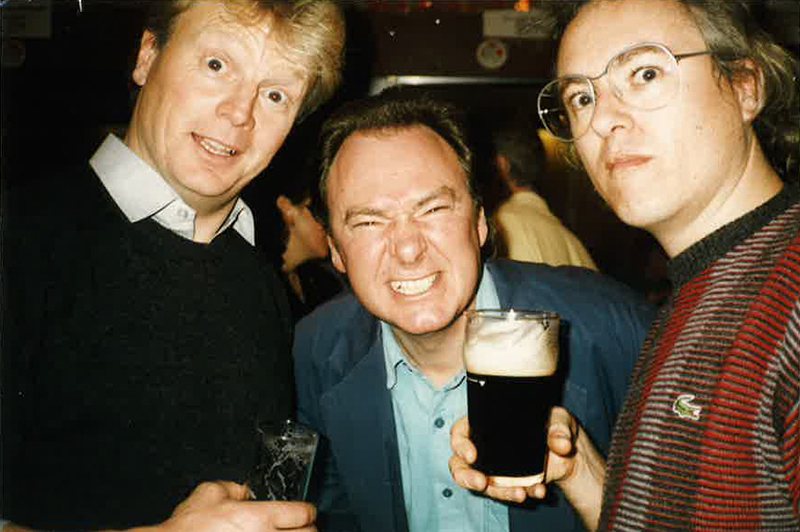
Longtime friend and former co-worker James Gordon says working alongside John is “… a total nightmare! It’s like having the cleverest, most demanding 12-year-old on the payroll … but then, there are the magical moments when he tells you something is impossible one day and has the problem solved the next day. He always looks forward, and never stops learning, or blowing things up.”

Originally published in FOH | Front of House Magazine, December 2017. John Stadius received the Parnelli Audio Innovator Award at the Parnelli Awards on January 26, 2018.
For more information about the Parnelli Awards, go to www.parnelliawards.com